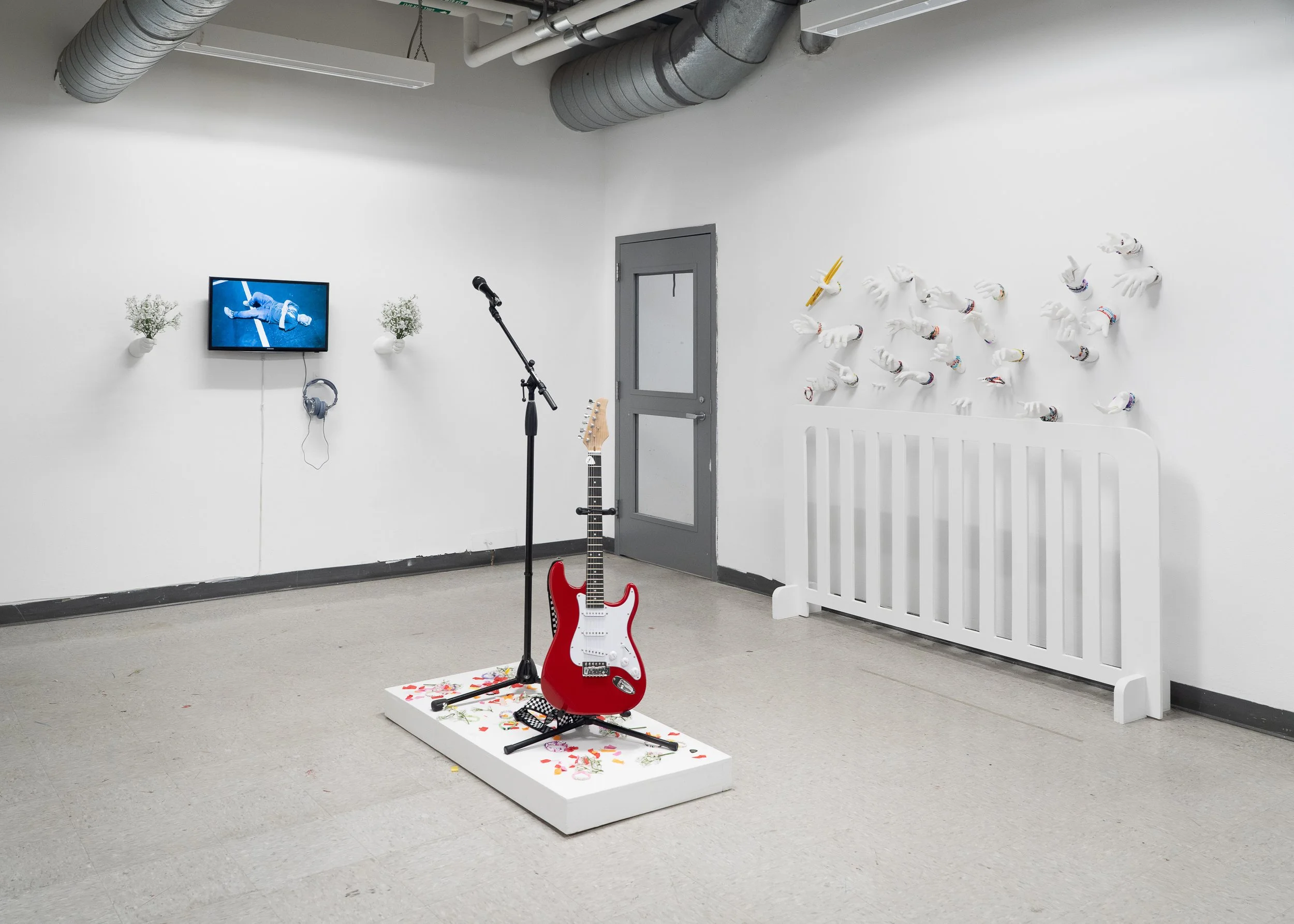
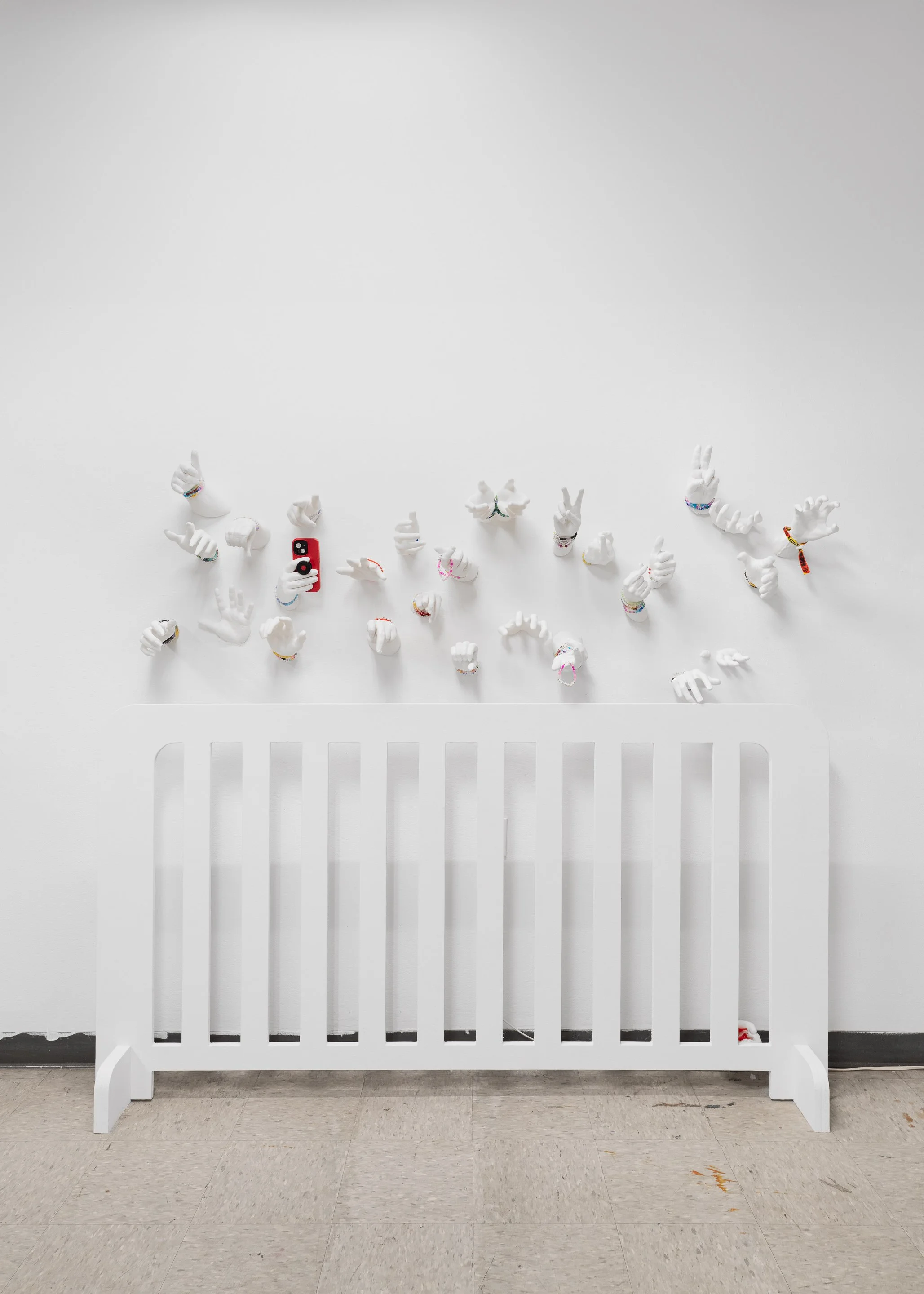
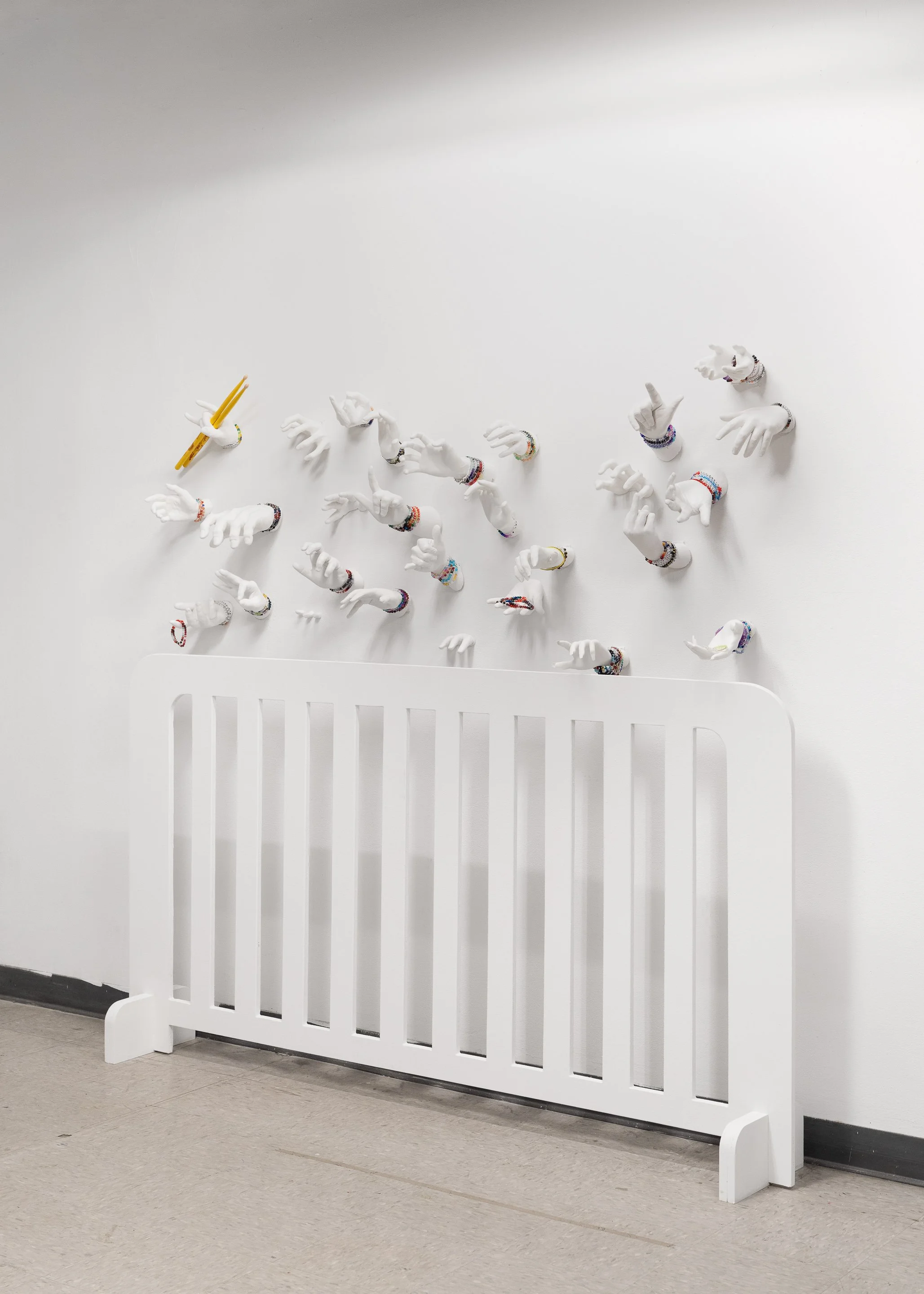
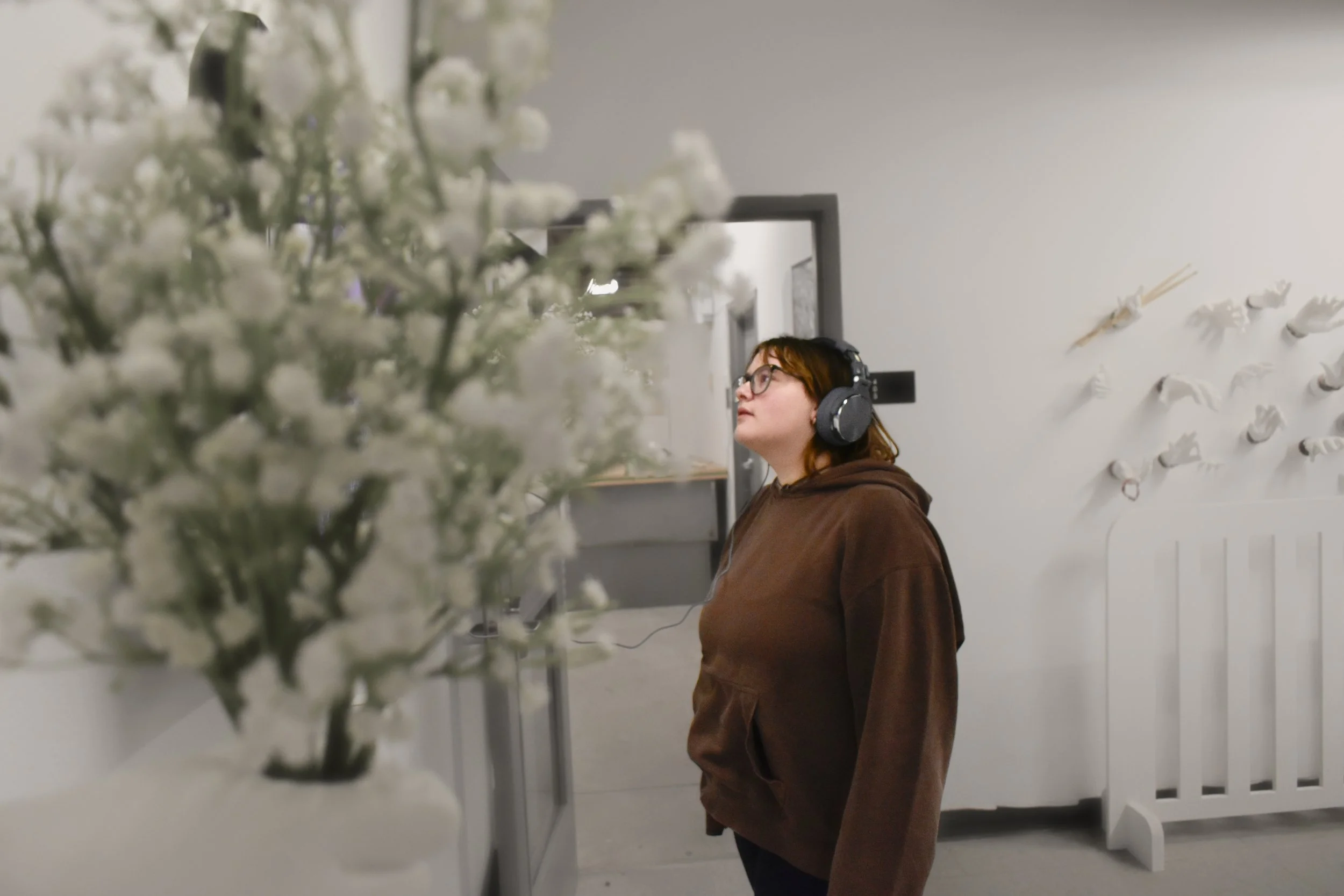
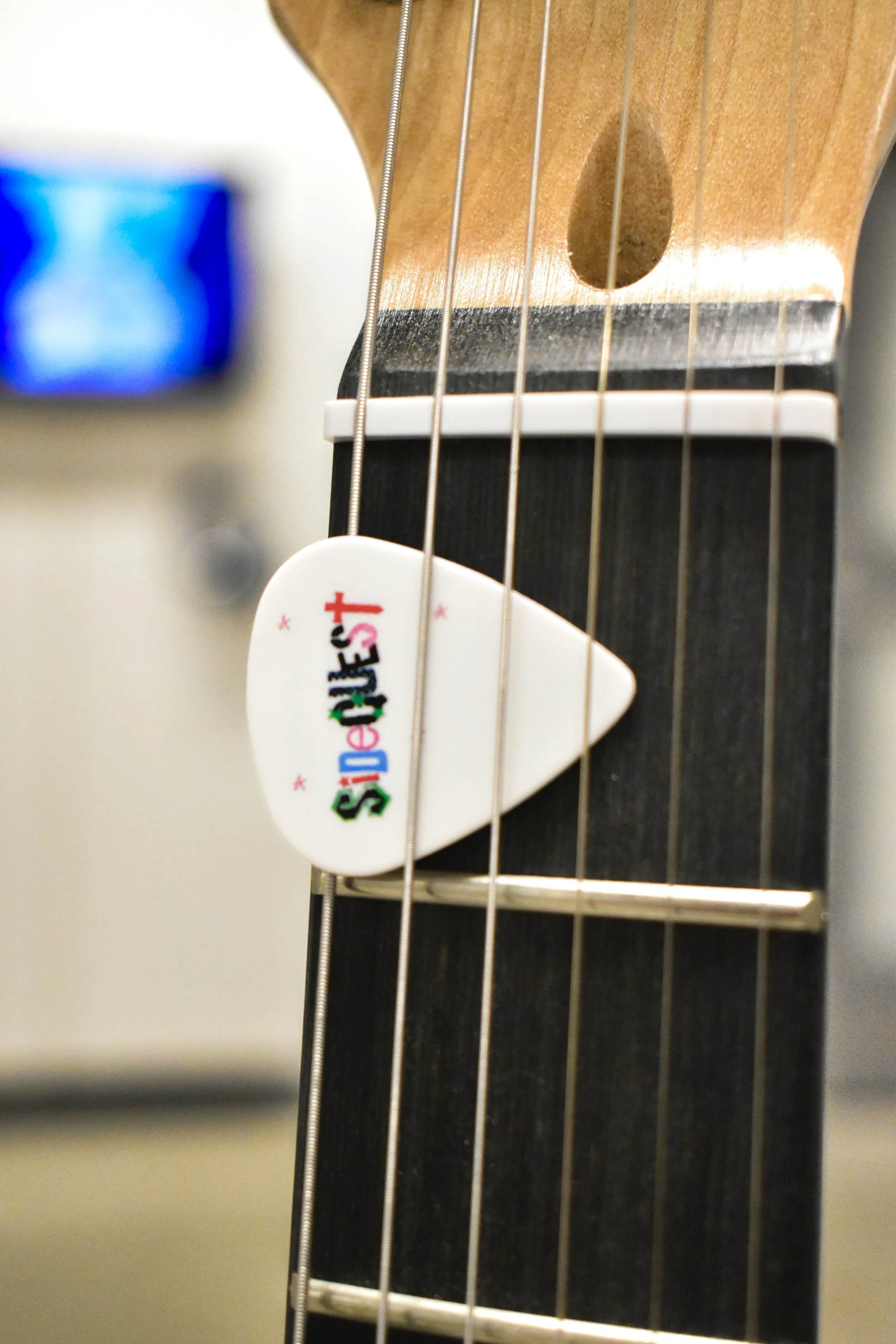
Front Lines considers the concert barricade not as a barrier, but as a site of intimacy; where strangers become temporary collectives, bound by sound, proximity, and care. This installation reconstructs that space: a stage at the center, a microphone and guitar positioned for a performance that never fully begins, and a field of reaching hands pressed forward from the wall. These hands (which are products of plaster molds and 3D filament), stand in for bodies that are absent yet overtly present, echoing the physical language of a crowd in motion.
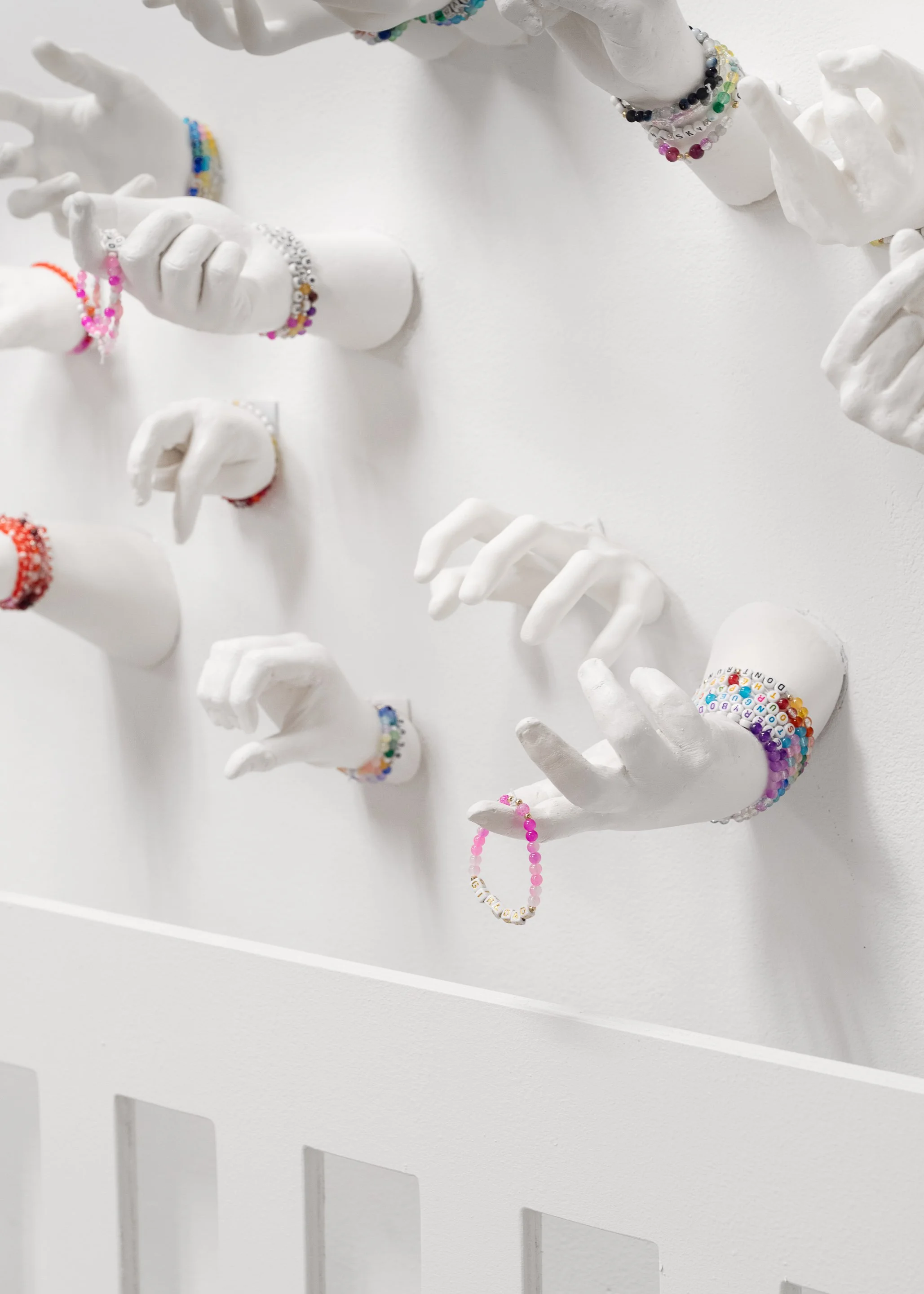
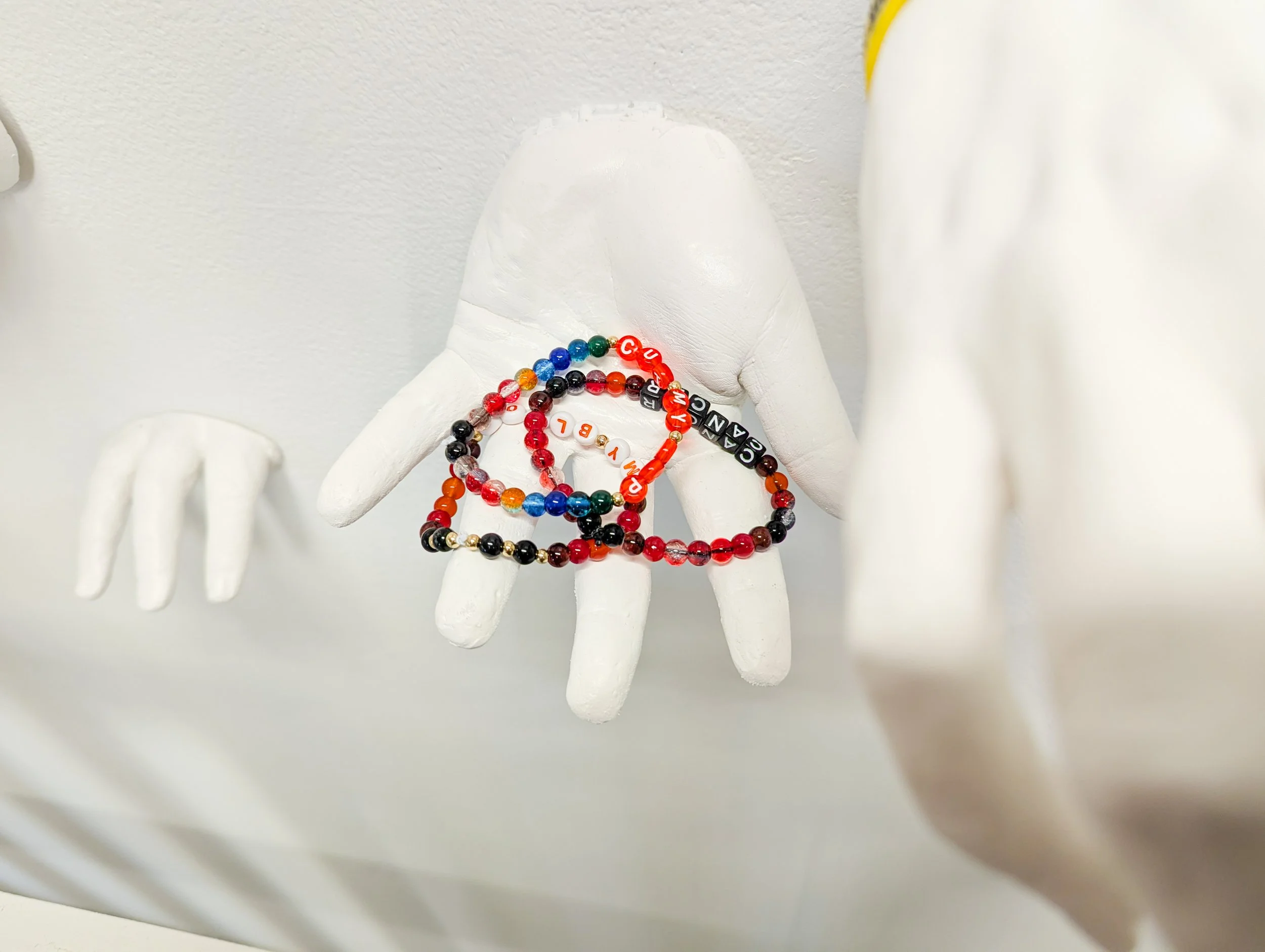
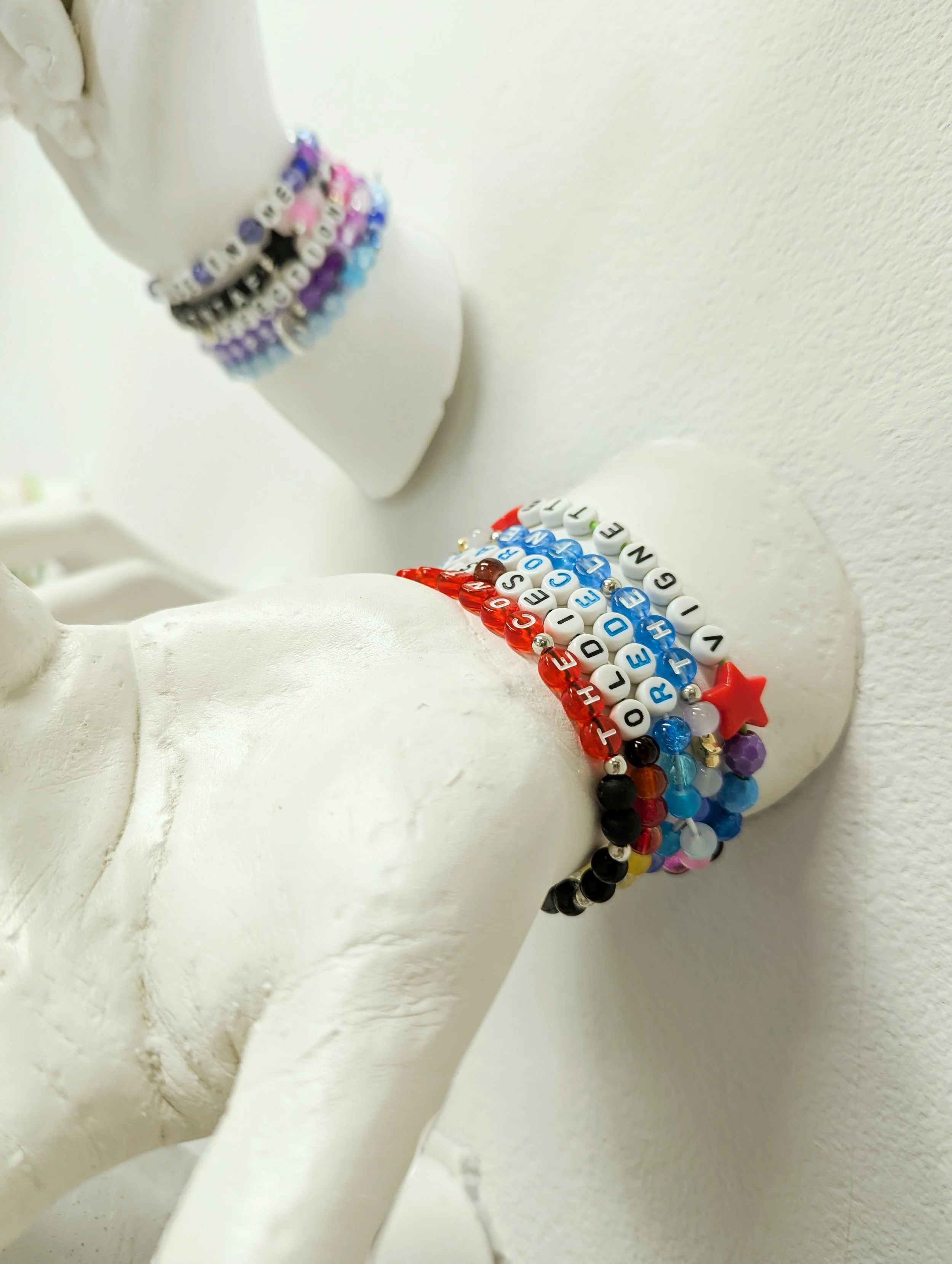
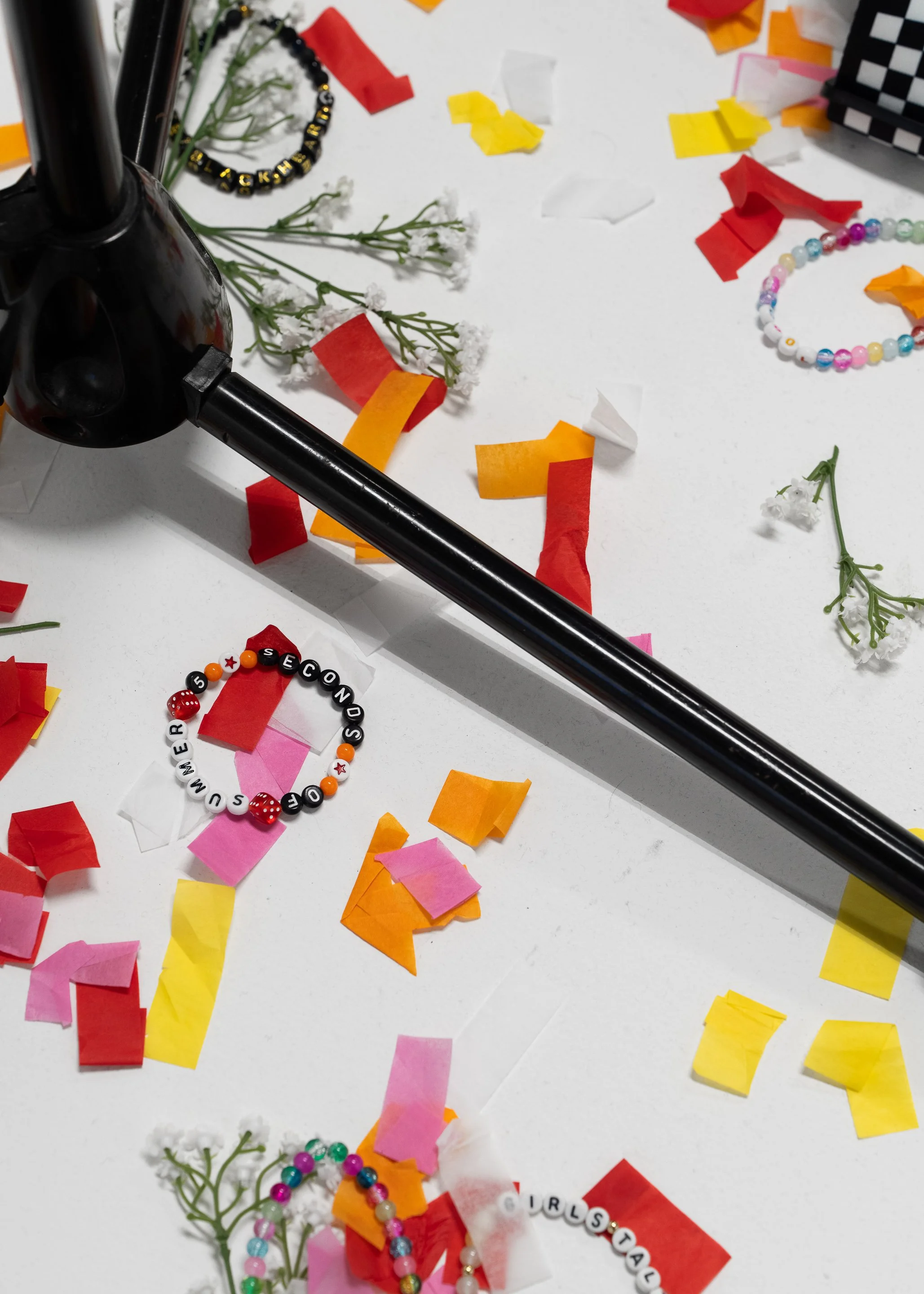
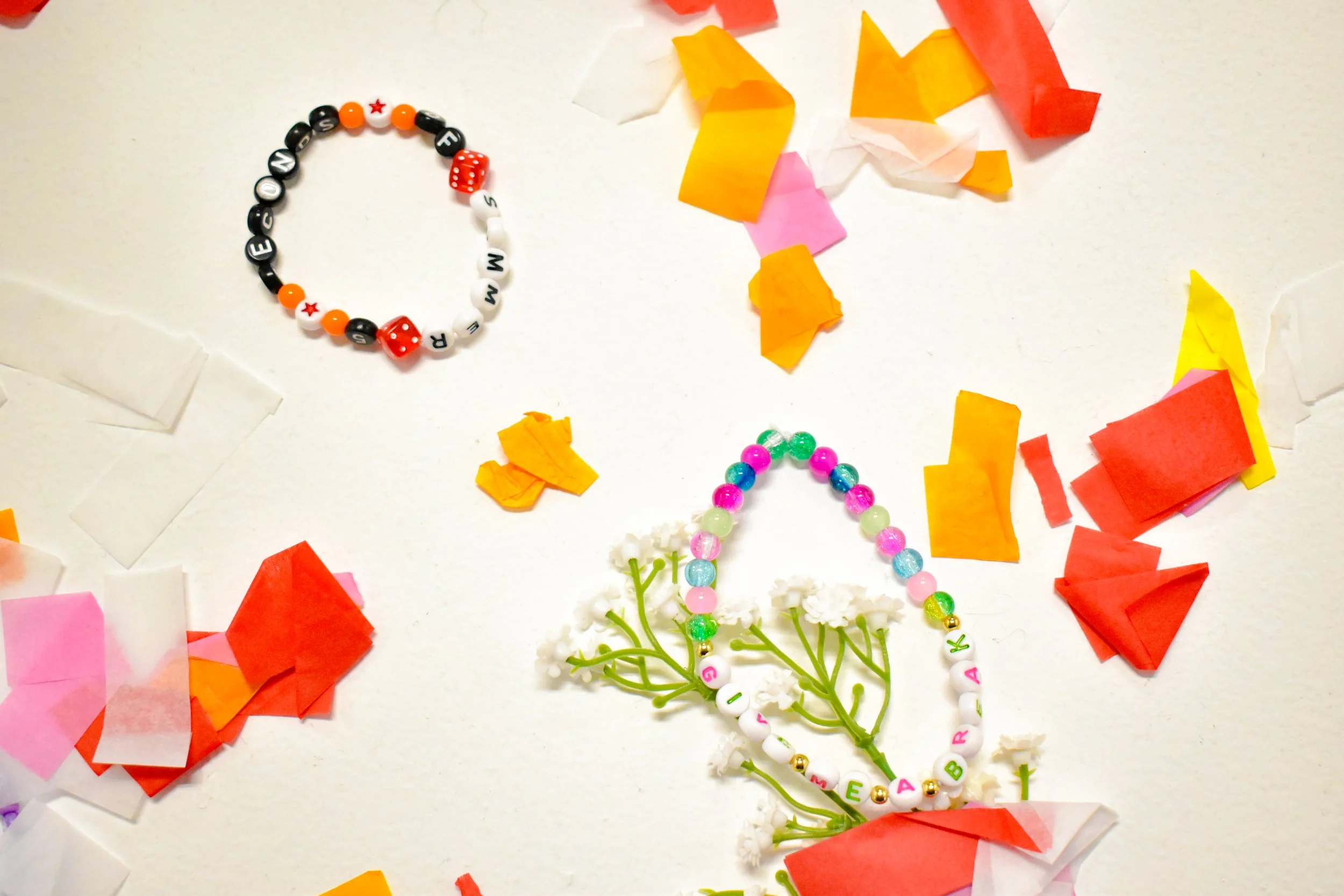
Each hand wears a handmade bracelet, inscribed with song titles, where the bead colors alongside them are my associated colors to said songs. These function as both offerings and identifiers, small, devotional objects that mirror those that are exchanged in venues. Where meaning is carried through touch, gift giving, and recognition. The bracelets transform individual songs into shared language, showing how music travels through people and embeds itself into lived experience.
The barricades anchor the work. It signals division (stage versus audience) but also marks the exact point of connection. It is where energy concentrates, where hands meet the air just below the performer, where the desire to be seen, to be held within something larger, becomes most visible. Here, the “front lines” are not about distance from danger, but proximity to belonging.
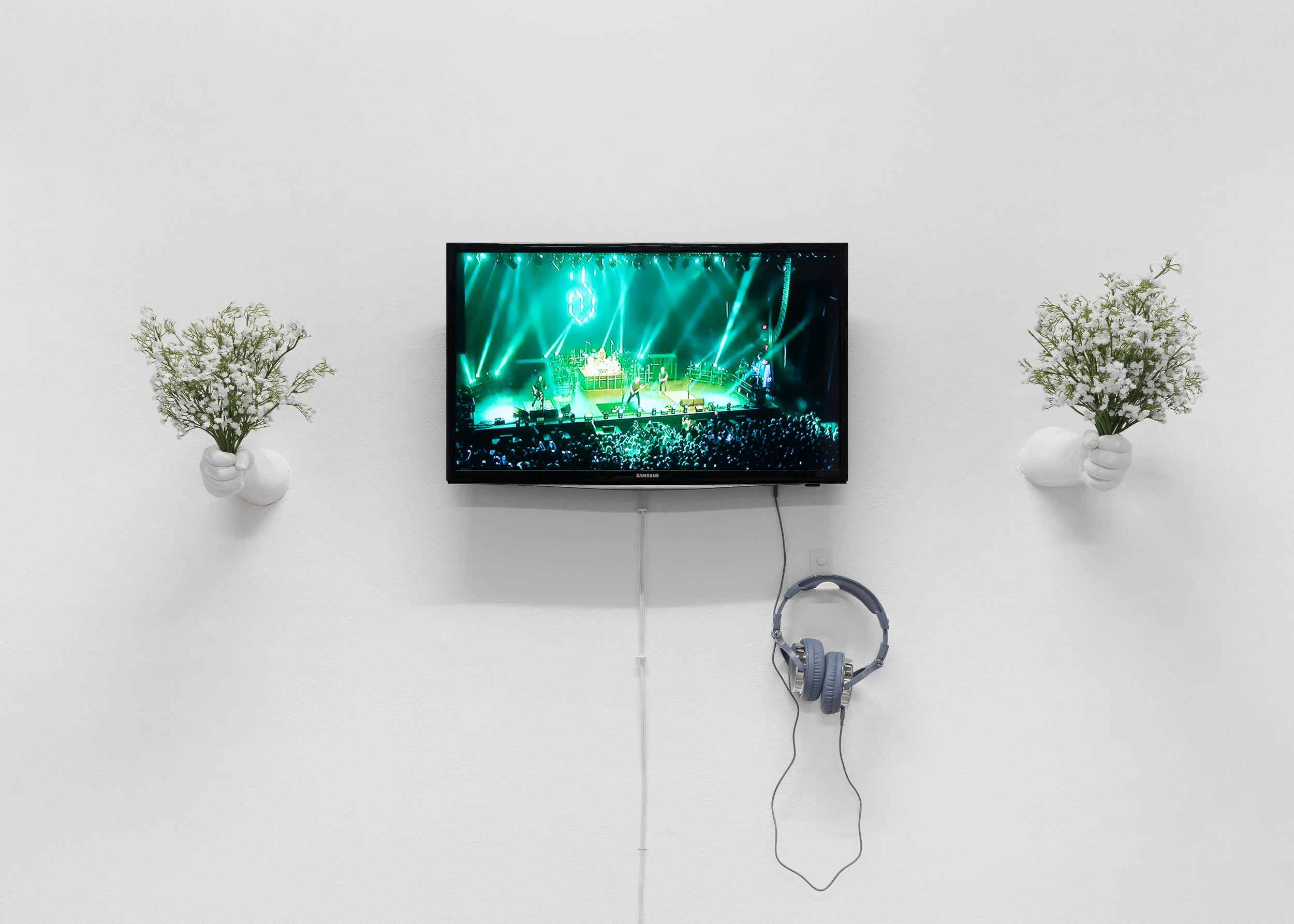
A video component, set to “Drag Path” by Twenty One Pilots, extends the installation into a more explicitly personal register. It reflects on the role of music in navigating depression, anxiety, and the ongoing search for stability. The concert space becomes more than entertainment; it operates as a support structure, a place where internal experiences are externalized and held collectively. Within this video shows clips of me from my personal life directly in contrast with clips of me at concerts. I highlight the difference between silent struggles and loud fixing of mental health.
Front Lines ultimately asks how music cares for us. It frames fandom not as passive consumption, but as an active, sustaining force. One that builds communities capable of carrying individuals through their most difficult moments.
-Meraki Gardner